


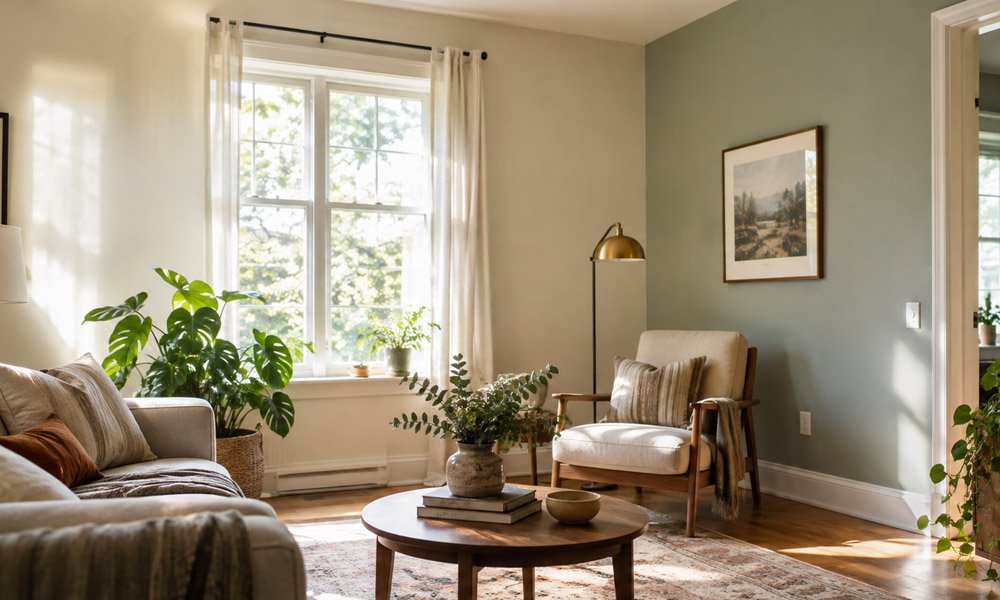
Paint finish does more than affect shine. Eggshell and matte reflect light differently, and that difference changes how big or small a room feels. If you’re picking a sheen for a tight guest room or a spacious open-plan kitchen, understanding light reflection helps you choose the right one. Learn how paint finishes shapes the look of a room.
Why Paint Finish Changes How Light Moves Through a Room
Paint finish involves surface texture at a microscopic level. A matte finish has a rougher texture that scatters light in many directions, so less of it bounces back to your eye. An eggshell finish is smoother, so it reflects more light in a single, more visible direction. Building designers measure this exact quality as light reflectance, rating how much visible light bounces off a wall on a scale from zero to 100. Federal guidance for building interiors recommends maintaining high surface reflectance on walls and ceilings to reduce glare and make better use of available light.
That is the same principle at play in your living room. A higher-sheen eggshell wall reflects more of the light hitting it, while a flatter matte wall absorbs more of that light instead of bouncing it back into the room.
How Reflected Light Shapes the Way a Room Feels
Reflected light does more than brighten a space. Researchers studying interior perception have found that surface color and lightness directly affect how spacious a room feels to the people inside it, not just how bright it looks. A study on interior perception found that lighter wall colors increase perceived spaciousness compared with darker ones. Other research on how people judge interior space found that materiality strongly influences perceived spaciousness, alongside factors such as ceiling height and access to views.
Picture a small guest bedroom with a single north-facing window. Painted in a flat matte finish, the walls hold on to whatever light drifts in, and the room can feel dim and boxed in by early afternoon. Switch to an eggshell finish in the same off-white shade, and the walls start doing some of the work the window can’t manage alone. It can bounce available light back into the space and make the same four walls feel noticeably more open.
Matching Finish to the Room You’re Painting
Eggshell tends to work best in rooms that get limited daylight or where you want a brighter, larger-feeling result. Living rooms, home offices and hallways with modest window coverage are all good candidates. The slight sheen also makes eggshell easier to wipe down, which suits high-traffic areas like entryways and kids’ playrooms.
Matte earns its keep in rooms with plenty of natural light already, or in spaces where you want a cozier, more grounded feel rather than an airy one. It also hides small wall imperfections and old patch jobs far better than a shinier finish, keeping dents and rough patches far less noticeable than eggshell would.
Take a below-grade basement rec room with two small window wells and uneven drywall from a past renovation. Matte would only deepen the cave-like feel. An eggshell finish in a warm off-white color gives the same room a fighting chance to feel brighter, while still being forgiving enough for movie nights and regular foot traffic.
How to Bring More Natural Light Into a Room
If the room’s daylight problem runs deeper than color and finish, adding real daylight solves what paint alone cannot. In tight spots where a full skylight will not fit, tubular skylights fit tight spaces, such as hallways, bathrooms and closets. These windows channel daylight down through a reflective tube instead of a full roof opening.
That kind of daylight boost works alongside a higher-reflection paint finish rather than replacing it, since both tackle the same problem from different angles. Reaching for off-whites and soft warm neutrals rather than deep, saturated tones will reflect more light, no matter which sheen you land on or how much natural light is available.
Frequently Asked Questions
Here are quick answers to the questions homeowners most often ask about paint finish and room size.
Does paint finish really affect how big a room looks?
Yes. Because sheen affects how much light a wall reflects rather than absorbs, the same rooms can look and feel lighter with a higher-sheen finish like eggshell, even with the same paint color and square footage. Color and lighting still matter, but finish is often the most overlooked detail.
Is eggshell or matte better for a small room?
Eggshell is usually the better call for a small room with limited daylight because its higher sheen reflects more of the available light back into the space. Matte works better in a small room that already gets plenty of natural light, where the extra reflectance matters less.
Can skylights make a room feel bigger?
Yes. Bringing in more actual daylight through a skylight or a compact tubular option adds a light source that paint can reflect. Pairing that extra daylight with a higher-reflectance finish like eggshell tends to have the biggest impact on how open a room feels.
Is eggshell or matte better for hiding wall imperfections?
Matte is the better choice for imperfections. Its flatter texture scatters light instead of concentrating it, so dents, patched nail holes and uneven drywall seams are much less noticeable. Eggshell’s higher sheen does the opposite, catching light at an angle and drawing more attention to any bumps or flaws underneath.
Reflecting on Your Finish Choice
Eggshell and matte are not just style choices. They control how much light your walls give back to the room, which shapes whether a space feels open or closed before you add furniture. Small, dim rooms usually benefit from eggshell’s extra reflectance, while matte suits brighter rooms or walls you’d prefer to keep understated. Test a sample patch in real daylight before committing to a full room.