
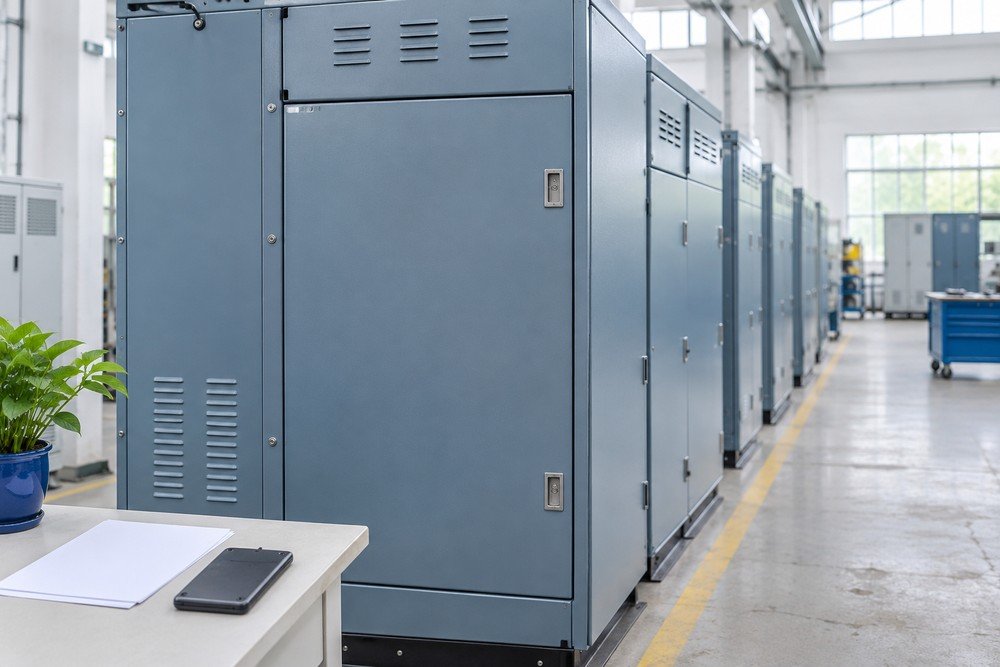
Pressure to raise grid-equipment output calls for a closer look at how your crews work. Faster production can mean more elevated tasks, more setup changes and less time between jobs to inspect the equipment crews depend on. Rushed setups, awkward reaching and skipped inspections are risks to address as production demands grow. Safer access equipment, consistent inspection routines and smarter workflow design belong alongside delivery targets, with lift selection forming one part of that wider safety plan.
Why Grid Buildout Speed Is Putting Pressure on Your Shop Floor
The United States Department of Energy reported a 443% rise in lead times for distribution transformers between 2020 and 2022. The Department of Energy also noted that orders that once took two to four months to fulfill now take 22 to 33 months. Separately, lead times grew from three to six months in 2019 to 12 to 30 months in 2023. Use these historical figures when reviewing current production commitments.
Those longer lead times can push production pressure onto the shop floor. If a transformer or other grid component is already delayed, facility teams may feel pressure to recover time through faster fabrication, finishing, assembly and inspection work. That makes it important to review how people will perform the extra work before schedules get tighter.
For your facility, an output target needs a corresponding review of how people will perform the additional work. Examine the time allocated to welding, finishing and inspection, including the preparation required for each elevated task. A schedule should account for selecting access equipment, positioning it and completing the checks specified for its use.
When people search for scissor lifts for electrical substation maintenance, it is important to separate field maintenance at a live substation from the manufacturing and servicing of large grid components. In a facility, the main question is how to give crews safe, repeatable access around large equipment while production demand continues to grow.
Pay particular attention to work that requires several positions around a large transformer or substation component. Review whether operators can comfortably reach each working surface and whether the plan allows repositioning between tasks. Treat an awkward working position or an improvised setup as something to address before the next production increase.
Your review should also separate productive work from avoidable interruptions. Look for repeated trips to collect tools, access equipment waiting at another station and tasks scheduled before the right setup is available. These observations give you specific issues to resolve while keeping the people performing the work central to the production plan.
Solving Work-at-Height Risk with Safer Access, Inspections and Workflow Design
Compare ladders, scaffolding and lifts by working position, task duration and available setup space. The National Institute for Occupational Safety and Health (NIOSH) recommends alternatives to ladders for extended elevated work in its construction guidance. Across industries in 2022, elevated falls accounted for approximately 81% of all fatal slips, trips and falls and 20% of nonfatal cases.
When the work involves manufacturing or servicing large electrical grid components, the access requirements differ from those for field maintenance at a live substation. Scissor-style access platforms can help operators reach welding, finishing and inspection points more safely than repeated ladder moves.
Matching the access method is one part of the solution. Facility managers should also build inspections into the schedule and look for workflow issues that cause repeated climbing, reaching or equipment repositioning.
Evaluate lift systems based on the working positions and the space each task requires. Personnel-access configurations from LPI Lift Systems offer useful examples because the manufacturer supplies equipment for fabricating, assembling and finishing grid components.
SPHT Series Manually Positioned Scissor Lift
The SPHT Series combines manual positioning with a built-in transport handle. A portable base may suit production areas where component sizes or working positions vary. That flexibility matters when planning access for painting, welding or fabrication, especially where a fixed setup would limit the surfaces your crew can reach.
Rail Guided Custom Elevating Work Platform
Repeated side-access tasks need a planned approach and withdrawal route. This configuration follows floor rails and incorporates a shaped platform, tool connections and restraint harness anchor points. For linear workflows, these features provide a defined positioning arrangement to assess against the production sequence.
Utility Vehicle Roof Access Platforms
Vehicle servicing presents a separate access problem when technicians work around roof-mounted equipment inside a service bay. These platforms provide passive fall protection, with fixed mounting or locking casters and configurable stair placement. The practical benefit is an access arrangement fitted to the vehicle, bay and entry route.
The Real Cost of Work-At-Height Injuries on the Production Floor
The Bureau of Labor Statistics’ 2024 workplace fatality data records 844 fatal falls, slips and trips across industries in the United States. Compared with 885 in 2023, the total fell by 4.6%, while falls exceeding 30 feet accounted for 10.8% of fatal falls, slips and trips in 2024. How would an injury-related absence affect your crew and the next scheduled job?
Inspection routines should be planned like any other production step. Build time into the schedule for pre-use checks, maintenance review and any outside support needed to keep access equipment ready for daily work.
NIOSH’s ladder selection and inspection guidance calls for inspecting ladders before each use and planning tasks to reduce work at elevation. Could your crew complete a task at floor level or reorder the work to reduce the need for repeated access changes? Use that question when reviewing the sequence of assembly, finishing and inspection, alongside the access equipment each stage requires.
For lifts, follow the equipment’s operating instructions when planning inspections and maintenance, and consider who will perform that work. LPI’s traveling technicians are available for on-site lift inspections, maintenance and repair, giving you an outside-support option to evaluate alongside your facility’s resources.
Building Safety Into Every Foot of the Grid’s Future
Bring your operators into the equipment review and ask which working positions deserve closer attention. Their input can guide a discussion about configuration choices, inspection responsibilities and service support over the equipment’s life. The strongest plan connects the problem and the solution — rising output pressure, safer ways to work at height, inspections built into the schedule and workflows designed around the people doing the work.