
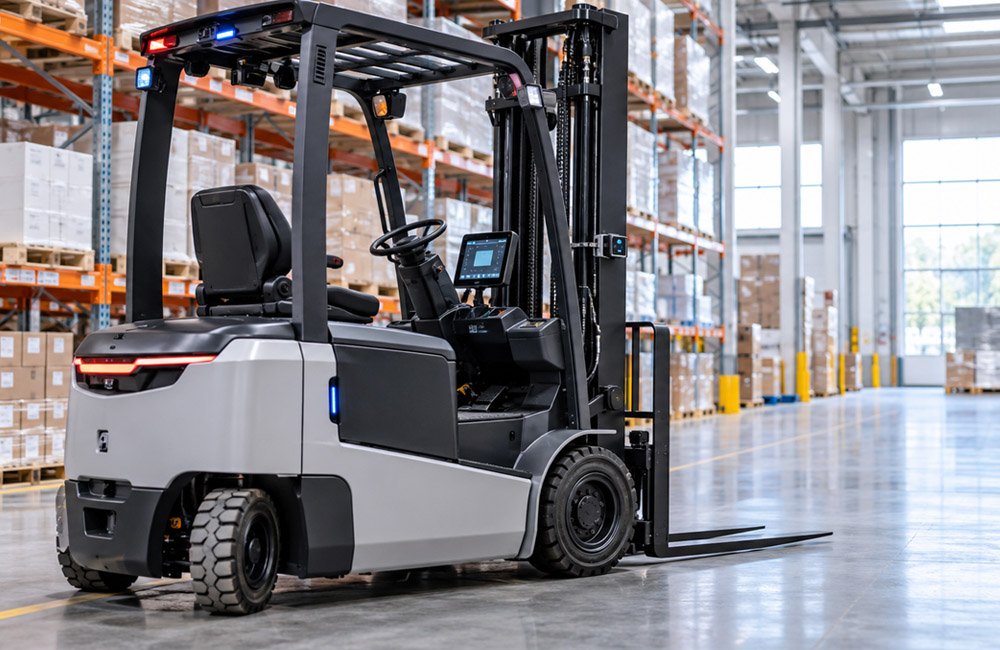
Forklift design remained relatively static for two decades, but the past five years have brought substantial advances. For facility managers evaluating where to buy forklifts in the Minneapolis area, understanding these changes is essential. Electrification, integrated telematics and operator-assist safety features now define modern material handling equipment while delivering measurable improvements in efficiency, safety and operational insight.
Forklift Electrification
The shift from lead-acid batteries to lithium-ion power has accelerated across material handling operations. These newer batteries feature a sophisticated battery management system that optimizes performance. This advance results in higher forklift travel speed and lifting capacity compared to traditional power sources.
Battery management systems monitor internal sensors for safety, reliability, voltage, amperage, state of charge, state of health and energy throughput. These analytics power real-time diagnostics and predictive maintenance capabilities, which can contribute to effective fleet management and help prevent costly downtime.
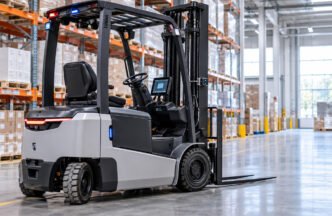
Beyond performance gains, electrified material-handling equipment supports sustainability goals by producing zero emissions during warehouse operations. Material-handling specialists, such as Fairchild Equipment, can help facility managers near Minneapolis compare modern lithium-ion options, including the Yale ERC080VHL. It has an 8,000-pound capacity, requires no battery maintenance and supports fast charging. The zero-emission model’s integrated lithium-ion battery expands the operator compartment, which is more ergonomic.
Integrated Telematics
Combining onboard sensors, GPS and wireless communication networks, telematics systems track and transmit real-time equipment data to centralized dashboards. This technology uses Wi-Fi and cellular networks to send information about equipment performance and driver behavior to cloud-based platforms, while enabling access control, maintenance scheduling, impact detection and health monitoring. Real-time fleet data helps you make informed day-to-day operational decisions and long-term purchasing choices.
Beyond visibility, telematics can boost productivity by identifying underutilized assets and optimizing deployment patterns, and it may lower operating costs through efficient maintenance scheduling. The technology can also reduce workplace accidents by monitoring driver behavior and environmental conditions.
Operator-Assist Safety Features
OSHA regulation 1910.178(l) requires forklift operators to complete certification training, which equips them with the technical skills and sound judgment needed to safely drive and haul cargo. Certified drivers must undergo evaluation at least once every three years and receive refresher instruction when observed operating unsafely.
Operator-assist safety technology helps drivers monitor their environment and receive hazard alerts to prevent collisions with other forklifts, pedestrians and other obstacles. These systems use sensors, cameras and automated controls that work alongside certified personnel. Fairchild Equipment’s Hyster H30-40A has these operator assistance systems:
- Rear-facing camera: Provides an LCD rear-view display for enhanced visibility during reverse operations
- Spotlight and pedestrian awareness lights: Offers multiple mounting positions, colors and control methods to alert nearby workers.
- Shelf height selector: Features one-touch activation for precise load positioning at predetermined heights
- Mast-mounted work lights: Uses a slim LED design to illuminate work areas without adding bulk
- Liquefied petroleum gas tank bracket interlock: Prevents equipment operation when tank connections aren’t properly secured
Frequently Asked Questions
Facility managers often ask these questions about forklift innovations.
How do lithium-ion batteries improve forklift performance?
Lithium-ion batteries improve forklift performance by increasing lifting and travel speed. They use advanced battery management systems that support real-time diagnostics and collect data for predictive maintenance.
Why does forklift telematics matter for fleet management?
Forklift telematics matter for fleet management by gathering granular information about equipment health and operator behavior. Gleaning insights from such data enables sound day-to-day and long-term decision-making.
What are examples of forklift operator-assist safety features?
Examples of forklift operator-assist safety features include rear-facing cameras, spotlights, pedestrian awareness and mast-mounted work lights, shelf height selectors and liquefied petroleum gas tank bracket interlocks.
Modernizing Your Fleet With Innovative Forklifts
Modern forklift capabilities deliver practical advantages rather than flashy features. These technologies can justify their investment through measurable gains in productivity, sustainability, efficiency and safety compared to older models.