
Basic Information
| Field | Details |
|---|---|
| Full name (as given) | Diana Amanda Chism |
| Public role | Best known publicly as the mother of Philip Chism (connected to a widely reported criminal case) |
| Family size | Three children (one son, two younger daughters reported) |
| Spouse / partner listed | Stacy Tremayne Chism (reported as spouse / father of the children; separation/divorce filings have been reported) |
| Notable dates | Son’s arrest: October 2013; son’s birth year reported as 1999 |
| Public career profile | No widely published professional biography or long-form career record found in public press |
| Net worth | Not publicly documented / undisclosed in available reporting |
Family Portraits — up close and at a distance
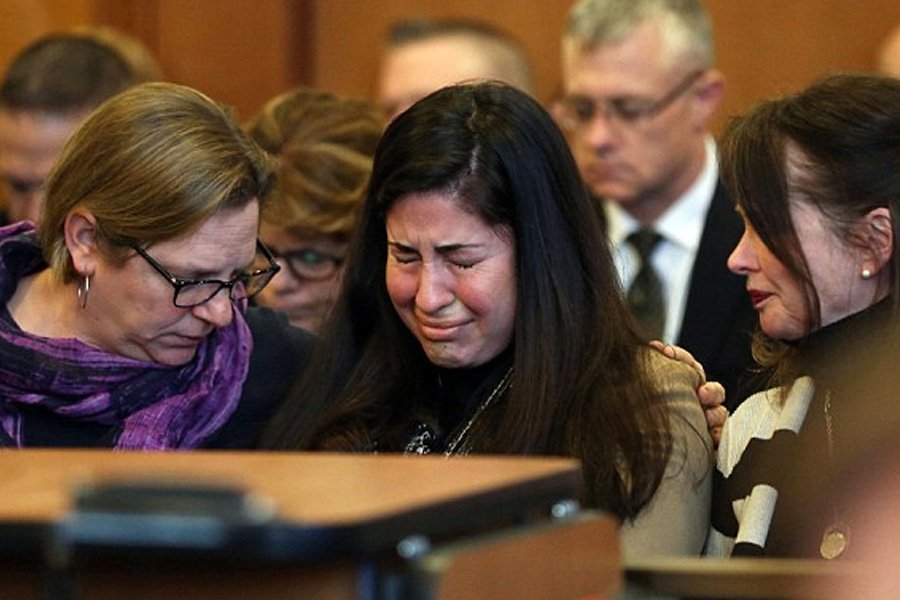
I write this as someone who has sat at the edge of a courtroom in my imagination — it’s where public facts meet private rooms, and where names on a page become people in profile. Diana Amanda Chism is not a celebrity in the way actors or rock stars are; she is a person whose presence in the public record grew out of one of those awful, headline-heavy moments that force family life under a microscope.
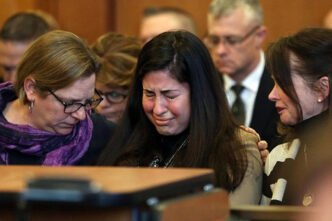
First: the son. Philip — born around 1999 — is the member of the family whom headlines fixed upon after an October 2013 arrest that became the focal point for national and local reporting. That event, and the subsequent trial and sentencing, shaped what most readers will encounter when they look for Diana’s name. In press accounts Diana appears as a mother: attending hearings, making brief public statements, asking for privacy and, at times, for prayers — the standard scripts of grief and regret that play differently depending on whose voice is heard.
Then: Stacy Tremayne Chism, identified in court documents and reporting as the father of the children and Diana’s spouse (or former spouse, depending on filings). Reports indicate marriage strain and formal separation/divorce action in the years around the household upheaval — a reminder that families are messy ecosystems, and legal papers often become the only clear map available to reporters.
There are also two younger daughters — referred to in coverage as “the other children” or “younger sisters” — whose names have not been broadly published in major outlets. They exist in the narrative as protected figures: children who, for the most part, are shielded from the glare (and intentionally so). As a writer I find the absence of their names as meaningful as any headline — it’s a small, private island kept from the public sea.
And finally, the extended family: names such as Eduardo and Joyce Barbieri have surfaced in testimony and reporting as grandparents, witnesses to the family’s history and background. These are the kinds of details that pop up in courtrooms — a cousin’s name, a grandparent’s recollection — and then remain part of the record like fragments of a larger mosaic.
Career, Money, and the Public Record — what isn’t there speaks as loudly as what is
If you’re reading to find a full CV, a LinkedIn, or a list of awards — turn the page. There is no widely published professional or business biography of Diana Amanda Chism in available press coverage. She does not have the kind of public-facing career footprint that gets captured in profiles; rather, the public material about her centers almost entirely around family context and court appearances.
Net worth? Not documented. No public filings, business directories, or reputable reporting that lays out assets or a financial statement for Diana have surfaced in standard news coverage. That absence is itself information: it tells us she has not been a subject of public financial scrutiny the way some household names are.
The Case, the Headlines, and the Aftermath — dates and numbers that matter
I won’t offer a blow-by-blow here — that’s not the aim — but a few numbers help orient the story:
- October 2013: arrest of Diana’s son, the moment when the family’s private emergency became public headline.
- 1999: widely reported birth year for her son (making him about 14 at the time of the incident).
- 3: the count of children in the household as reported in multiple accounts (one son, two daughters).
- Decades: a typical phrasing in reporting about the son’s sentence — long prison terms, with parole eligibility referenced at far-future points (public descriptions emphasize lengthy incarceration rather than near-term release).
These figures are not trophies; they are markers in a timeline where human lives were re-shelved into legal files, court transcripts, and, later, social-media discussions.
Media, gossip, and social media — the echo chamber
The way a family becomes a “story” today is less like a single photograph and more like an algorithmic collage. Local newspapers and broadcast outlets produced the primary reporting — dates, filings, court quotes — and then a wave of human-interest sites, true-crime blogs, and social platforms repurposed, condensed, or sensationalized those facts.
On platforms like TikTok and YouTube, the case shows up in brief, snackable recaps: “where are they now?” videos, speculative threads, and comment sections where rumor can feel as loud as reportage. I’ve seen it — a thousand little echoes: quotations clipped from hearings, a line from a victim’s family statement, a parent’s plea for privacy republished as fodder for late-night scrolling.
If you’re familiar with true-crime culture — think of those serialized documentaries that pair grainy police photos with mournful soundtracks — the Chism-related material fits that mold, with a local-town center stage and national curiosity as the surround sound.
The gaps — the story’s silences
A lot of biographies are built from public documents, from CVs, from interviews. Diana’s public portrait lacks those building blocks. We don’t have a protracted life story laid out in public: no long interviews, no public-facing career milestones, no financial disclosures. What we have are snapshots — family court filings, courtroom scenes, public statements of sorrow. And that means there are gaps: dates of birth for Diana herself, career history, details about the younger daughters’ lives — these are, by design or accident, absent.
As a reader and as a storyteller, I try to honor those gaps. They aren’t blanks to be filled with gossip — they’re boundaries, intentional or otherwise, between public curiosity and private life.
FAQ
Who is Diana Amanda Chism?
Diana Amanda Chism is a mother whose name entered public attention through media coverage tied to her son’s arrest and subsequent criminal proceedings in October 2013.
How many children does she have?
Reporting indicates three children: one son and two younger daughters.
Who is Stacy Tremayne Chism?
Stacy Tremayne Chism is reported as the father of the children and Diana’s spouse or former spouse, with public records and reporting indicating separation/divorce filings.
Is Diana a public figure with a known career?
No widely published career biography or public professional profile for Diana appears in standard news coverage.
Is her net worth known?
Her net worth is not publicly documented in available reporting.
Are the younger daughters’ names public?
Major outlets have generally not published the younger daughters’ names, and they are largely treated as private.
Has Diana faced criminal charges?
There is no widely reported record of criminal charges against Diana in the material that centers on the family’s public affairs; most reporting focuses on her role as a parent in court settings.
Why is information about her limited?
Most of the public information about Diana derives from coverage of her son’s case and court filings; outside of that, there is little in the public record — so privacy and gaps remain.