

Running a warehouse is not just about having enough space to store products. The way that space is organized determines how quickly orders get picked, packed, and shipped. A poorly designed layout can slow down every step of the fulfillment process, while a well-thought-out one keeps operations running smoothly from the moment inventory arrives to the second a package leaves the dock.
Equipment’s Role in Layout Design
No layout works in isolation. The equipment moving through a facility shapes how aisles should be sized, where storage zones get placed, and how traffic flows throughout the day. Different operations rely on different machinery, and the layout has to be built around whatever that equipment demands.
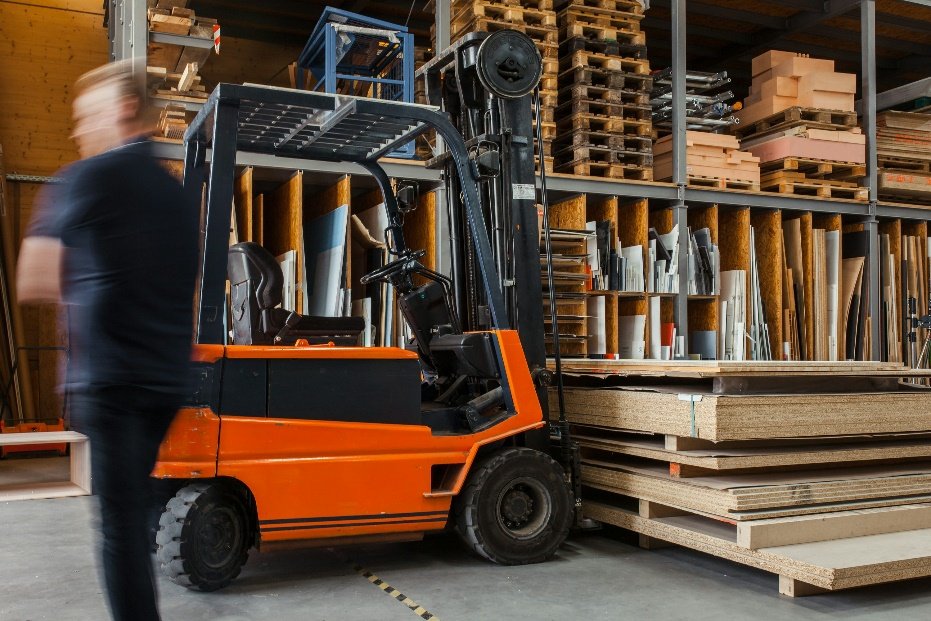
For example, order picker forklifts are among the most essential pieces of equipment in high-volume environments, allowing workers to reach elevated rack levels and retrieve items with far greater speed and accuracy than manual methods allow. To accommodate this kind of equipment properly, aisles need to be wide enough for safe operation without wasting valuable floor space. Designing the layout with the actual machinery in mind from the start prevents costly reconfigurations down the line.
Start with a Clear Zoning Strategy
Every efficient warehouse divides its floor space into purposeful zones. Receiving, storage, picking, packing, and shipping each have distinct needs, and keeping them logically separated reduces cross-traffic and confusion. When these zones are poorly arranged, workers end up walking long distances, crossing paths with equipment, and losing time on every single order. A smart zoning strategy places high-demand areas closer to the shipping dock, so frequently picked items never travel farther than they need to. It also makes onboarding new staff considerably easier, since a well-zoned layout is intuitive to navigate and reduces the learning curve significantly. Over time, a clearly defined zone structure also makes it easier to identify where bottlenecks are forming and address them before they affect the broader operation.
Prioritize Product Velocity
Not all products move at the same pace. Fast-moving inventory should always be positioned closest to the packing and shipping area, while slower items can be stored further back or in harder-to-reach sections. This principle, often called slotting, is one of the simplest ways to cut fulfillment time without adding staff or equipment. Reviewing which products are moving fastest and adjusting their placement regularly ensures the layout stays responsive to actual demand rather than an outdated assumption about what sells. Seasonal shifts and promotional cycles can change velocity patterns quickly, so slotting should be treated as an ongoing process rather than a one-time setup. When products are consistently placed where they make the most operational sense, pickers spend less time searching and more time fulfilling, which has a direct impact on how many orders go out the door each day.
Design Aisles for Flow, Not Just Fit
Aisle configuration is one of the most impactful decisions in warehouse design. Straight aisles that run parallel to the dock make it easier for workers to move in a predictable, efficient pattern. Narrow aisles increase storage density but require specific equipment and careful traffic management. Wider aisles allow more flexibility but reduce the total amount of usable floor space. The right choice depends on order volume, the type of storage systems in use, and the mix of equipment operating in the facility. What matters most is that the aisle layout supports consistent forward movement rather than backtracking and bottlenecks.
Use Vertical Space Intentionally
Floor space is expensive and finite, but height is often underused. Installing taller racking systems and storing less frequently needed inventory at higher levels frees up ground-level space for active operations. This approach works best when storage assignments are made thoughtfully, with lighter and slower items going up high and heavier or faster-moving stock staying at ground level or within easy reach. Vertical expansion should always be planned alongside the equipment and safety measures needed to access those upper levels reliably.
Build in Flexibility from the Start
Warehouse needs change. Seasonal demand, new product lines, and shifts in order volume all require the layout to adapt. Designing with flexibility in mind means using modular racking that can be reconfigured, leaving buffer zones that can absorb overflow, and avoiding permanent fixtures in areas that may need to serve different purposes over time. A rigid layout that works perfectly today may create serious problems a year from now if the business grows or changes direction. It is also worth considering how changes in fulfillment methods, such as a shift toward smaller, more frequent orders, can completely alter the way space needs to be organized. Building adaptability into the original design is far less disruptive and costly than trying to retrofit a layout that was never meant to evolve.
Streamline the Picking Path
The picking path is where fulfillment speed is won or lost. Every unnecessary step a picker takes adds up across hundreds of orders per day. Batch picking, zone picking, and wave picking are all methods that reduce travel time by grouping tasks more intelligently. The layout needs to support whichever method works best for the operation, with clear signage, logical product placement, and unobstructed pathways that keep pickers moving without hesitation or confusion.
Keep Safety and Compliance in Mind
Efficiency and safety are not competing priorities. A layout that causes accidents, near misses, or equipment damage will ultimately slow everything down through downtime, repairs, and disruption. Designated pedestrian walkways, clear sightlines at intersections, proper lighting throughout all zones, and enough space for equipment to operate without risk are all part of a well-designed layout. Compliance with relevant workplace safety standards should be treated as a baseline requirement, not an afterthought.
A warehouse layout is never truly finished. The best operations treat it as a living system, reviewing performance regularly and making adjustments based on what the data and the people working the floor are telling them. When the physical design of a warehouse is built around the actual workflow of fulfillment rather than just the storage of goods, everything from receiving to shipping becomes faster, cleaner, and more reliable.