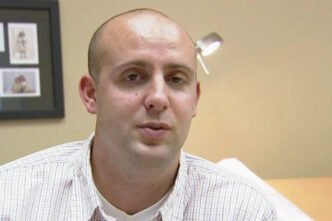

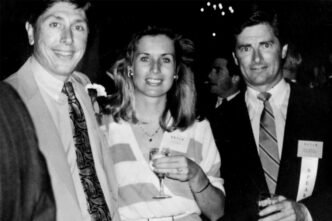

Basic Information
| Field | Details |
|---|---|
| Full name | Daniel Broderick Iii |
| Birth | 1944 (reported) |
| Death | November 5, 1989 |
| Occupation | Medical-malpractice attorney (San Diego area) |
| Marital history | First wife: Betty (Elisabeth) Broderick; Second wife: Linda Kolkena Broderick (married April 1989) |
| Children | Kimberly (b. ~1970), Lee (b. ~1971), Daniel (b. ~1976), Rhett (b. ~1979) |
| Notable events | Highly publicized divorce and custody battles; Daniel and second wife Linda were killed in 1989 |
I tell stories the way a director stages a scene — light through venetian blinds, a slow pan across a suburban courtroom, a legal brief left on a kitchen table. Daniel Broderick Iii’s life reads like a script that keeps cutting to a darker act: the rise of a successful attorney, the friction of a breaking marriage, and then the final, irreversible frame.
The Professional Life — numbers and standing
Daniel built a career litigating medical-malpractice cases — a niche where settlements can be six figures, sometimes seven, and where reputation matters as much as rhetoric. By the late 1980s he was described in contemporaneous accounts as a prominent plaintiff’s attorney in San Diego and had held leadership roles in the local bar community. In legal circles he was the kind of figure who commands attention in a courtroom and on the evening news — a lawyer accustomed to high-stakes numbers and meticulous preparation.
| Metric | Approximate |
|---|---|
| Active legal era | 1970s–1989 |
| Typical case value (era) | Tens of thousands — low millions (for major malpractice suits) |
| Bar leadership | Served in local bar association leadership roles |
The Family — cast of four (plus two very different wives)
This family is both ordinary — kids, careers, custody forms — and cinematic: a custody fight that reads like a legal thriller and a domestic life that became public spectacle.
- Betty (Elisabeth) Broderick, first wife — She was mother to the couple’s children and the central figure in the divorce and aftermath. The marriage’s unpicking became a fierce, prolonged public dispute over finances, custody, and private grievances. That dispute is the shadow that stretched across all the later headlines.
- Linda Kolkena Broderick, second wife — Young, recently married to Daniel in April 1989, and a key figure in the tragic final chapter on November 5, 1989.
- Kimberly, the eldest child (born around 1970) — A young adult at the time of the tragedy, her life was suddenly interrupted by events that would define the family’s public image.
- Lee, another daughter (born around 1971) — One of the siblings who later navigated collage, testimony, and the media glare.
- Daniel (often referenced as Daniel IV) — Born mid-1970s; a son who was a minor when the family’s private strife became public history.
- Rhett, the youngest (born around 1979) — The child whose childhood was fractured by legal drama and a violent end.
The family dynamics were tangled: custody hearings, contested finances, ex-spousal resentments that did not remain private. The marriage, the split, the second union — each scene layered into the next until the narrative became national news.
Key dates & the turning point
Dates can be small, sterile things on paper — but each one here is an emotional fulcrum.
| Date | Event |
|---|---|
| 1944 | Daniel Broderick Iii born (reported) |
| ~1970–1979 | Births of four children: Kimberly, Lee, Daniel, Rhett |
| April 1989 | Marriage to Linda Kolkena |
| November 5, 1989 | Daniel and Linda were killed |
That last date is the icy cut in the story — everything before it becomes prologue, everything after it becomes consequence. It’s the kind of fact that journalists place in the lede and true-crime podcasts return to as if checking for loose threads.
The legal aftermath and public obsession
After the November 1989 deaths, the legal system took center stage: arrests, trials, verdicts. The divorce that once seemed like private paper — contracts, custody affidavits — turned into evidence in front of juries. The case lodged itself in the public imagination; talk shows, documentaries, and later retrospectives treated it like material for moral inquiry: who failed? who was right? who paid the price?
In practical terms, the estate and financial threads of the story were parsed — life insurance, probate, litigation costs — all the cold arithmetic that follows when a life ends unexpectedly. But the arithmetic never fully explains the human cost, the kids who grew up with headlines about their parents, the way a family portrait becomes an exhibit in a courtroom.
The human side — memories that trample headlines
I think about family photos, about mismatched socks at the bottom of laundry baskets, about the small gestures that mean the most. For the Broderick children, ordinary memories I don’t know but can imagine — first day of school, a voice reading bedtime stories — were overlaid with legal memos, subpoenas, and camera flashes. Public scrutiny rewrites intimacy.
There’s a hunger in the public for tidy narratives — heroes and villains, clear motives. Real life rarely obliges. Daniel’s life was both a professional achievement and a domestic unraveling; the truth sits somewhere between the courtroom transcript and a kitchen argument we’ll never fully see.
FAQ
Who was Daniel Broderick Iii?
Daniel Broderick Iii was a San Diego-area medical-malpractice attorney born in 1944 who became known professionally for high-stakes plaintiff litigation and publicly for the tragic events surrounding his death in 1989.
What happened on November 5, 1989?
On November 5, 1989, Daniel and his second wife, Linda Kolkena Broderick, were killed — an event that dramatically escalated a long, bitter marital and legal dispute.
Who were his immediate family members?
His immediate family included first wife Betty (Elisabeth) Broderick and their four children, Kimberly, Lee, Daniel (often referenced as a junior or IV), and Rhett, plus second wife Linda Kolkena Broderick.
Was there a trial related to the deaths?
Yes — the deaths led to criminal proceedings that became high-profile and widely covered in the media.
How did the public react at the time?
The case drew intense national attention, feeding talk shows, newspapers, and later true-crime retrospectives — the kind of spectacle that forever changes how a family is seen.
Did Daniel have a notable legal career before these events?
Yes — he practiced medical-malpractice law for years, held leadership roles in the local bar community, and handled cases with significant financial stakes.
What happened to the children afterward?
The children grew up under public scrutiny, navigating custody issues, legal testimony, and a lifetime framed by the events of 1989.
Is this story referenced in pop culture?
Yes — the case has recurred in true-crime shows, retrospectives, and cultural conversations about marriage, custody, and domestic violence, becoming a touchstone in late-20th-century true-crime lore.